
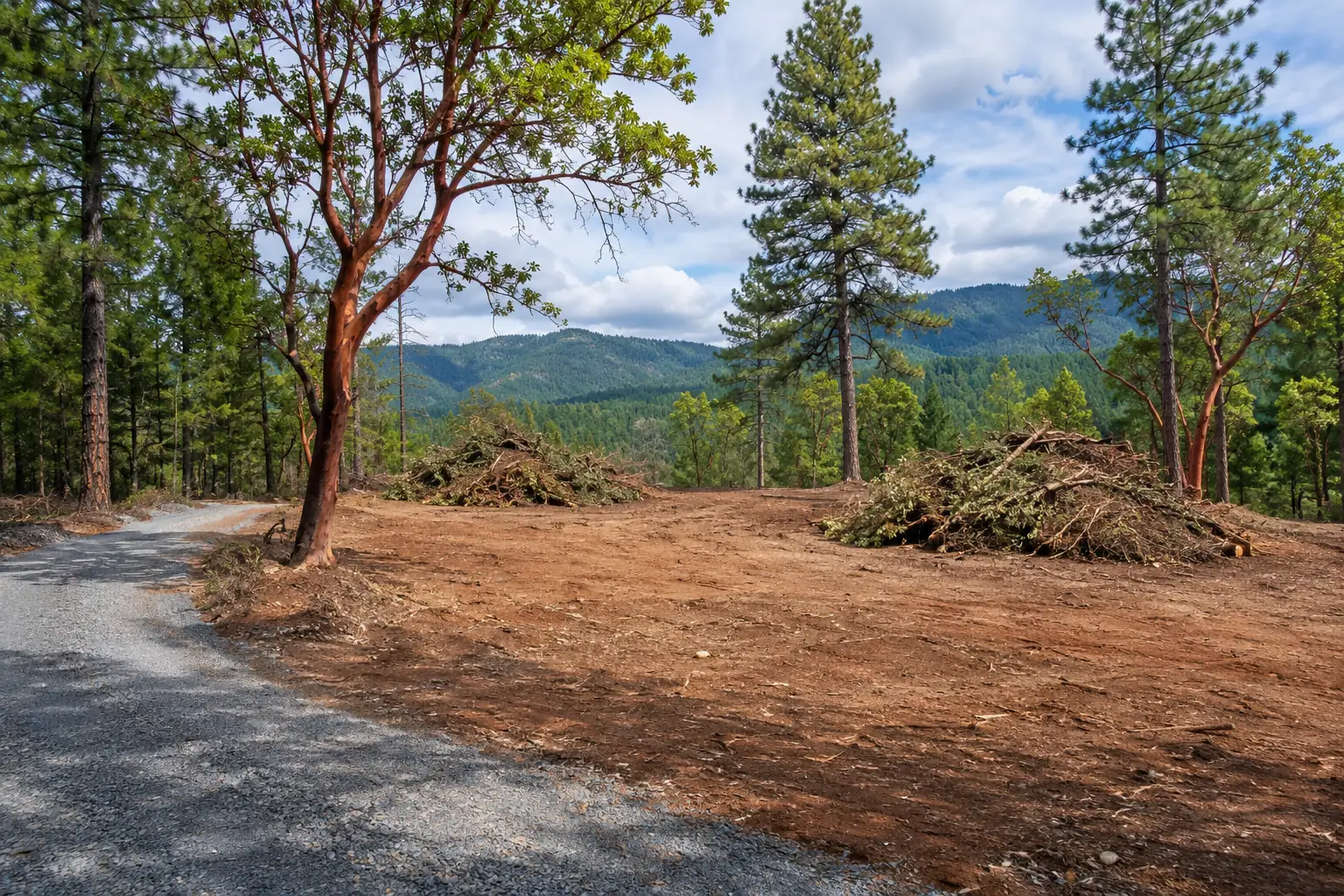
Lot clearing in Grants Pass and Josephine County means taking trees, brush, stumps and debris off a piece of ground so it can be built on, farmed, fenced or made safer from fire. Call (541) 507-9679 to reach a single tree service near Grants Pass, independent of this site, with an active Oregon CCB license. See whether it will walk the property with you and talk through what has to stay. Clearing bids take time to put together, so ask up front whether the site visit and the estimate are free.
What lot clearing usually includes
A clearing job is a bundle of smaller jobs, and the estimate should spell out which ones are in it. The usual pieces are:
- Felling the trees marked to go, from small oaks and madrone to tall firs and pines.
- Brush cutting of shrubs, vines and young trees, by hand or with a mower or masticator.
- Stump work, either grinding stumps below grade or pulling them with an excavator, roots and all.
- Debris handling, which can mean chipping on site, hauling away or piling for a burn when burning is allowed.
- Log handling, such as cutting firewood or hauling logs to a buyer.
- Rough grading to leave the ground level for a building pad or pasture.
A tree company may fell, chip and grind but leave grading to an excavation contractor. If the property only needs a few trees taken out near the house, the large tree removal page is a closer fit.
Creek and river setbacks around Grants Pass
Clearing next to the Rogue River or a creek runs into setback rules on both sides of the city limits. Inside those strips, vegetation is meant to stay unless a rule allows otherwise.
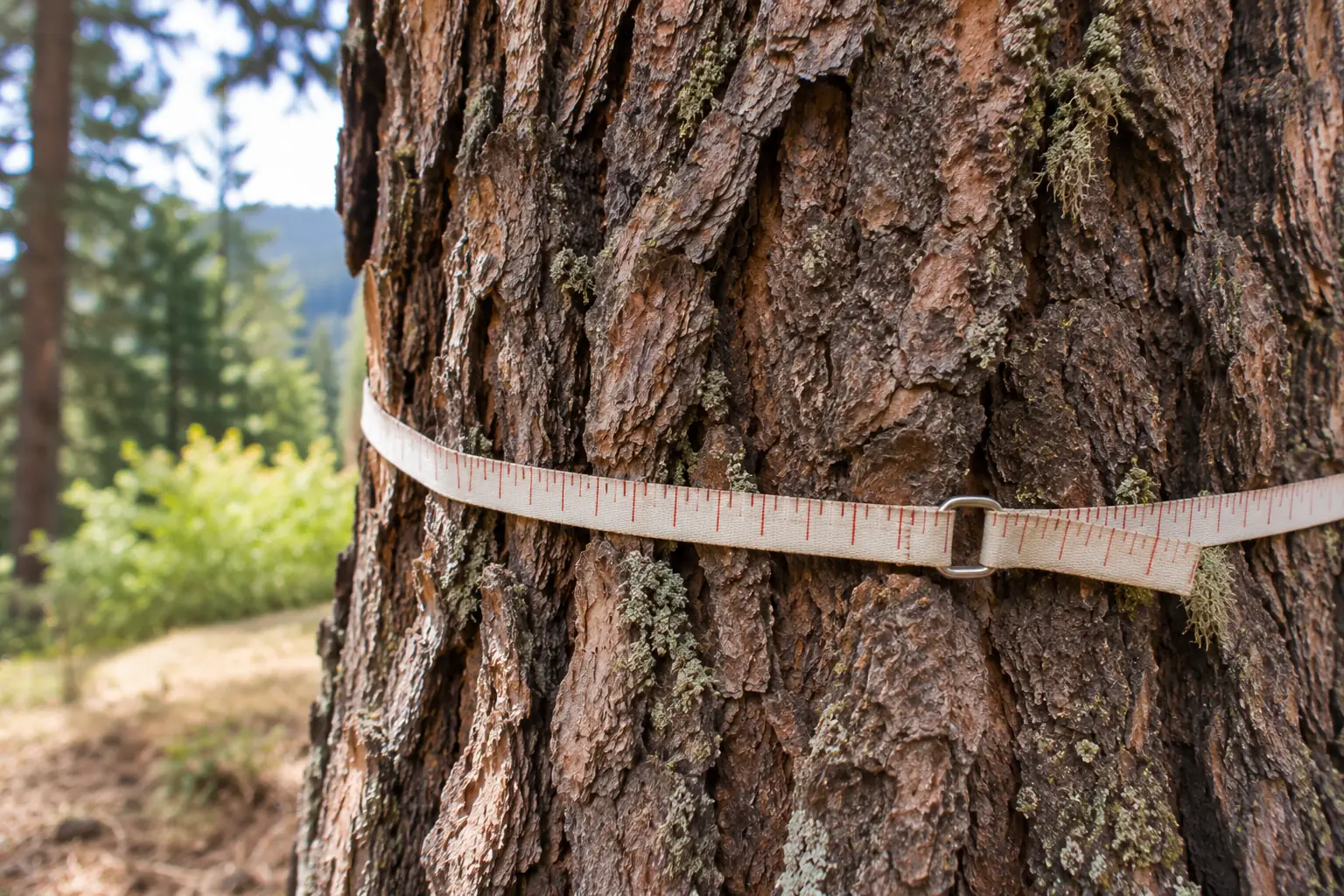
In rural Josephine County, the Rural Land Development Code sets a riparian corridor 50 feet wide on Class 1 streams and 25 feet wide on Class 2 streams, based on Oregon Department of Fish and Wildlife stream classes. A 2009 state Land Use Board of Appeals opinion describes the Rogue as a Class I stream with a 50-foot corridor. The code text, quoted in full in a 2018 LUBA opinion, says development in that corridor by fill, excavation, structures, paving or removal of vegetation is generally prohibited. Its listed exceptions include forest practices that a state Forest Practices Act permit covers in farm and forest zones, ongoing trimming or maintenance programs, and removing non-native plants when native ones go in. Approved work needs a development permit first.
Inside Grants Pass, Article 24 of the Development Code keeps structures at least 20 feet back from the edge of a stream bank, other than accesses, docks, bridges and pumping or water treatment facilities. It says that setback is used to preserve streamside vegetation. Trimming to keep plants within the banks or to fix a hazard is allowed. Noxious plants may be removed if the bank is replanted or stabilized within 90 days. Development near the Rogue must stay outside the 100-year floodway.
Confirm the setback with Josephine County Planning or the city's Community Development Department before any clearing near water, and have the strip flagged on the ground.
City grading permits and tree protection on building sites
Clearing inside Grants Pass that moves much soil needs a city grading permit. The city's grading permit requirements say the Engineering Department must issue one before anyone disturbs 50 cubic yards or more of material, about five dump truck loads, or does any work in a steep slope area.
The same sheet says erosion and sediment controls have to be in place before fill or excavation starts and that all work must be finished and protected no later than October 15.
For a lot going through major site plan review, Article 23 asks for a landscape plan that shows each existing tree, its trunk diameter measured 4.5 feet up and whether it will be removed or kept. Fencing or other protection for trees being saved must go up before construction, and that includes site clearing and grade changes. Its list of trees to keep first starts with ponderosa pine, incense cedar, sugar pine and Douglas-fir. Street trees need a separate permit, covered in the Grants Pass tree rules guide.
Bigger sites also fall under a state permit. Oregon DEQ's 1200-C construction stormwater page says coverage is required when a project disturbs one acre or more, or is part of a larger plan that totals an acre, and that clearing, grading and excavation all count as disturbance.
When clearing becomes a forest operation
Cutting timber on forestland, even to make room for a house, can bring in the Oregon Forest Practices Act. The Oregon Department of Forestry says on its e-notification page that the person responsible for forestry work, such as a landowner, timber owner or operator, must notify ODF no fewer than 15 days ahead of the start, and that operations using fire or power-driven machinery also need a permit.
Notifications are filed online through ODF's FERNS system. OSU Extension's guide to disposing of woody material, written by the Extension forester for Jackson and Josephine counties, notes that selling even small amounts of logs means filing a harvest notification, and that taxes may be owed on the proceeds.
If the land will not go back to trees, the replanting rules matter. Under OAR 629-610-0090 in ODF's 2026 Forest Practices rule book, a landowner can ask to skip reforestation for a use that cannot keep forest cover, through a plan for an alternate practice approved by the State Forester. The owner must show the use is allowed by local zoning and that the county assessor and planning department were told in writing, and the new use is expected to be finished within 24 months. Ask ODF's Grants Pass Unit whether your project needs a notification before you sign a clearing contract.
Fire season rules for clearing equipment
Saws, mowers and other engines fall under fire season limits on and near ODF-protected forestland, and which rules apply depends on whether the job is a forest operation.
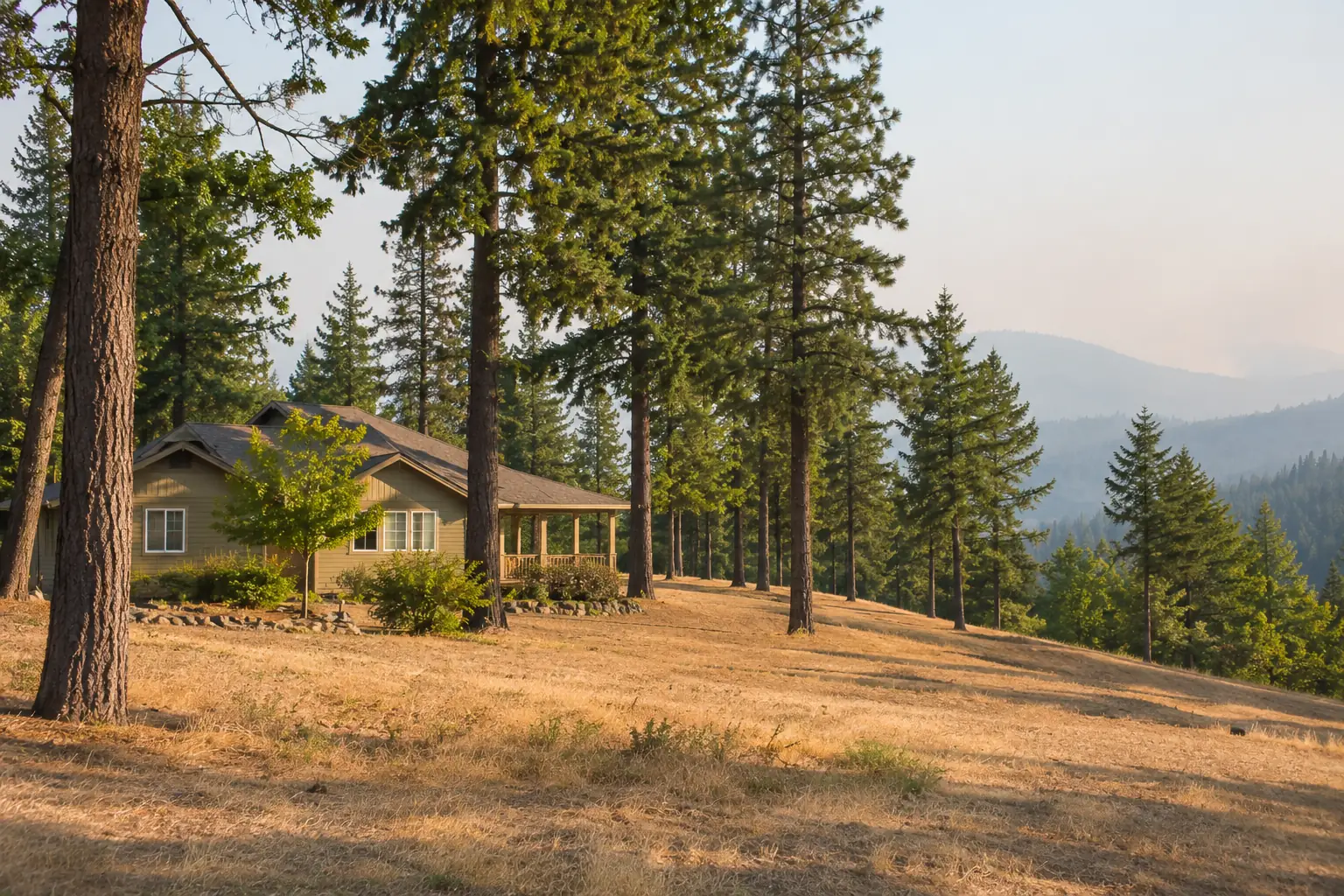
For ordinary property work, the 2026 regulated closure proclamation for the Southwest Oregon District, in effect from May 15, 2026, tied power saws, mowing of dry grass and other spark-emitting engines to the day's fire danger level. Low danger meant no hour limits. Moderate danger shut them off from 1 p.m. to 8 p.m., high danger from 10 a.m. to 8 p.m., and extreme danger shut them off entirely. Engines outside those categories had to run on a spot cleared of anything flammable for 50 feet around, with a hose or extinguisher ready.
Commercial forest operations follow ODF's Industrial Fire Precaution Levels instead. Level I requires a fire watch. Level II limits power saws, cable yarding and metal cutting to 8 p.m. through 1 p.m. Level III limits most remaining work to those hours, some of it only when equipment able to build fire line is close by, and Level IV shuts all operations down.
Locate buried utilities before digging
Pulling stumps, ripping roots and grading all disturb the ground, and buried lines often cross a rural lot. Oregon's Utility Notification Center FAQ says to call 811 somewhere between two full business days and 10 business days ahead of any digging.
The FAQ defines excavation broadly as moving earth or rock by any means, and it cautions that heavy machines pulling trees across the ground can harm buried utilities. Utilities usually mark their own lines only as far as your meter or the start of your private service. Lines past that point, such as power to a well pump, a shop feed or irrigation pipe, are yours to find and flag. Ask the clearing company who places the 811 call.
What drives land clearing costs
Clearing is priced by the job or the acre, and how thick the growth is matters most.
LawnLove's land clearing cost guide, updated December 27, 2025, puts the typical cost for an acre at $810 to $5,870. It lists $580 to $2,100 per acre for lightly wooded land, $3,300 to $5,600 for heavily wooded land and $330 to $630 per acre for brush clearing. These are national numbers, not Grants Pass prices, and the written estimate after a site visit is the one that matters.
Things that move a Josephine County quote:
- Tree size and count. Big firs and pines take more time to fell and leave more wood to handle.
- Slope and soil. Steep or rocky ground slows machines and may need hand crews.
- Stumps. Grinding is often cheaper than pulling, but a building pad may need roots out.
- Debris plan. Chipping, hauling and burning each cost differently, and burning has tight limits. The brush and debris removal page compares them.
- Timber value. Saleable logs can offset part of the cost.
- Permits and setbacks. Time spent on a creek setback, a grading permit or an ODF notice adds to the job.
Getting a useful clearing estimate
A little preparation gets you a closer clearing estimate.
- Mark property corners and any trees you want kept with flagging tape.
- Know what the ground is for, such as a house pad, a pasture, a garden or fire safety.
- Note creeks, wells, septic tanks and drain fields.
- Decide whether you want firewood, chips or nothing left behind.
- Ask the company for its CCB number and check it on the Oregon CCB license search.
Get the scope, the debris plan, stump handling and the total in writing. If the work is mostly limbing and thinning near a house, the tree trimming and pruning page may describe it better.
Clearing for building compared with clearing for fire safety
Fire-safety clearing keeps healthy, well-spaced trees, while a building pad may need every tree and root gone.
On many rural lots near Selma, Wilderville and Murphy, the job is mostly thinning brush and small trees, limbing the larger ones and handling the slash so it does not become new fuel. OSU's woody material guide warns that cutting brush and leaving it scattered can raise fire hazard at first, and says not to use that method within 100 feet of a home. For fire season and defensible space, read the Josephine County wildfire tree work guide. To see how a call through this site works, go to the Grants Pass tree removal home page.
Frequently asked questions
Is a permit required to clear land near Grants Pass?
It depends on the land and the work. Inside Grants Pass, moving 50 cubic yards or more needs a city grading permit. Near a creek or the Rogue, setback rules apply in both the city and the county. Timber harvest may need an ODF notification. Confirm with the city or county planning office first.
Can I clear trees right up to the Rogue River?
Generally not. In the county, the corridor along a Class 1 stream such as the Rogue is 50 feet wide, and removing vegetation there is generally prohibited without approval. Inside the city, the stream bank setback is used to keep streamside plants in place.
Do I have to tell ODF before cutting trees for a house site?
If the work is a forest operation on forestland, such as harvesting timber, ODF asks to be notified 15 or more days ahead. If the land will not be replanted, a plan for an alternate practice is part of that process.
Can clearing happen during fire season?
Yes, with limits. On and near ODF-protected forestland, saw and engine hours shrink as fire danger rises and stop at extreme danger. Burning debris is off the table for the whole season.