
Tree removal around Grants Pass usually runs from a few hundred dollars for a small tree to $2,000 or more for a very tall one, based on national cost guides updated in 2026. Dead trees, trees over a house and crane jobs can cost more. Call (541) 507-9679, free, to reach one independent, CCB-licensed company. Its written estimate is the price that counts. Getting that estimate seldom costs anything on a routine job, though the company has the last word, so check.
Published tree removal prices for 2026
National cost guides are the best published source of tree removal prices, since no city, county or state agency publishes a price list for Grants Pass. The table below shows what three guides list, with the date each page was last updated.
| Job | This Old House (updated March 5, 2026) | LawnLove (updated October 5, 2026) | LawnStarter (updated October 5, 2026) |
|---|---|---|---|
| Tree up to 30 feet | $150 to $450 | $285 to $435 | Not listed |
| Tree 30 to 60 feet | $450 to $1,200 | $435 to $870 | Not listed |
| Tree 60 to 80 feet | $800 to $1,500 | $870 to $1,160 | Not listed |
| Tree over 80 feet | $1,000 to $2,000 | $1,160 to $2,000 | Not listed |
| National average, one tree | $906 | $850 | $630 |
| Emergency removal | Up to $5,000 | $450 to $3,000 | Not listed |
| Fallen tree cleanup | Not listed | $90 to $300 | Not listed |
| Stump grinding | Not listed | Not listed | $158 to $450 |
| Full stump and root removal | Not listed | $180 to $525 | $175 to $516 |
Sources: This Old House tree removal cost, LawnLove tree removal cost and LawnStarter tree removal price. The guides do not agree on every band, which is normal. They use different data and survey methods.
Why your quote may not match the table
These are national ranges, so a real quote in Grants Pass can land above or below them. The written estimate from the company that looks at your tree is the number to plan around, not any figure on this page.
Two trees of the same height can be priced very differently. A tall pine in an open field that can be dropped in one piece is a quick job. The same pine leaning over a roof, with a power drop running through it and no truck access, can take a full day and extra gear. Prices also shift with fuel costs, demand after storms and how busy companies are. If the price you get is far outside these ranges, ask the company to explain what is driving it.
What raises or lowers the price
Height is the starting point, but the details of your site decide most of the final number. These are the factors companies weigh at the estimate visit.
- What the tree could hit. Houses, garages, fences, gardens and neighbors' property mean cutting in small pieces and lowering them on ropes.
- Tree condition. Dead and decayed trees can be unsafe to climb, which can mean a lift or crane.
- Access. A narrow gate, a steep slope or a septic field in the way slows the work.
- Wires. Trees near power lines need the utility involved before cutting.
- Trunk size and wood. Big oaks are heavy and slow to cut. Large firs and pines produce a lot of wood to haul.
- Cleanup. Hauling logs and brush costs more than leaving wood cut to length.
- The stump. Grinding is usually priced separately.
For more on the jobs at the top of the range, see the large tree removal page. For the stump, see stump grinding in Grants Pass.
Local costs and rules that can affect the bill
A few Grants Pass and Josephine County rules can add steps, time or cost to a tree job. Most do not apply to a tree in a private backyard, but it is good to know them before you get quotes.
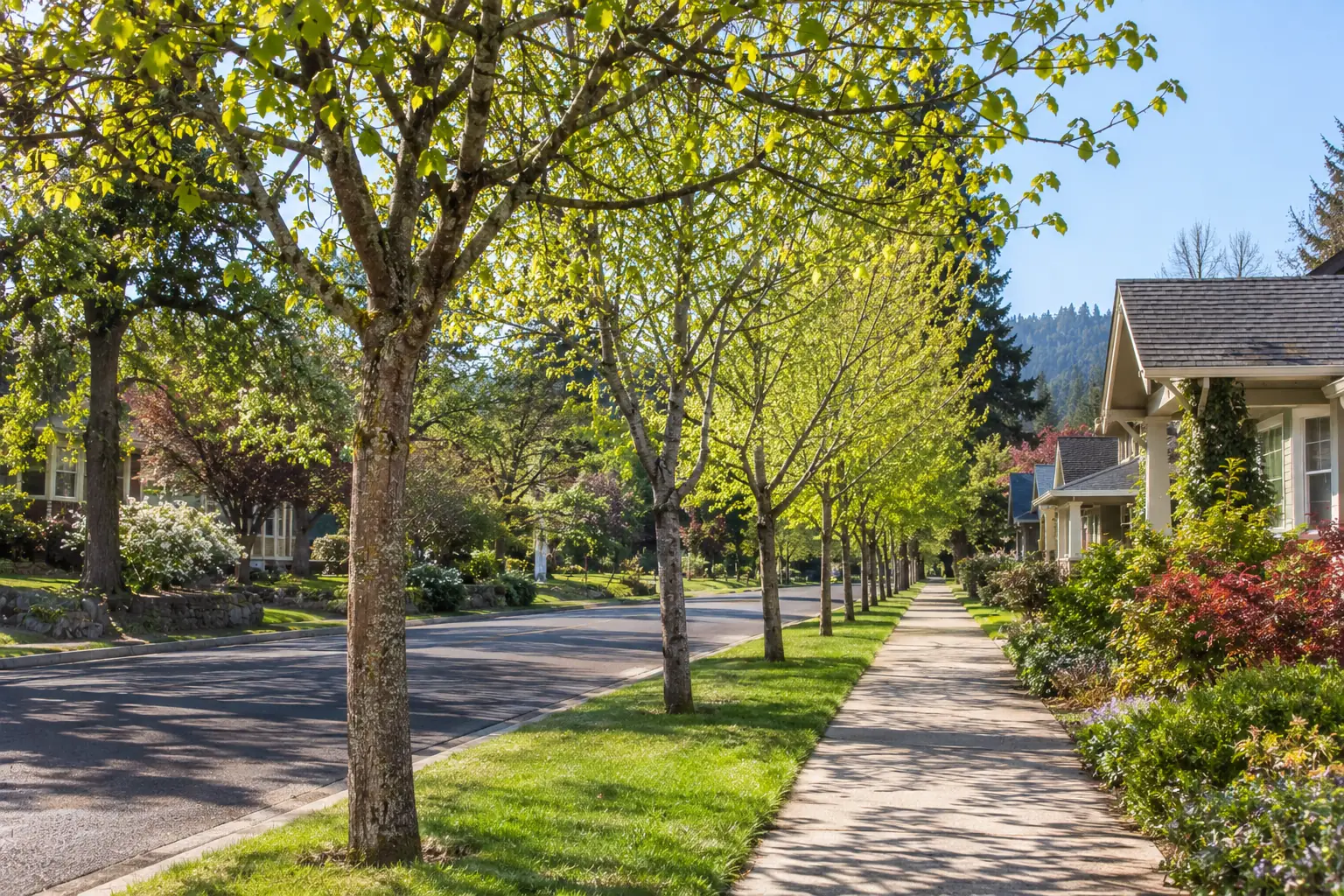
Street trees. For a tree in the public right-of-way, the city requires a tree permit, which has no fee. The work must be done by a city-prequalified contractor with ISA certification. The permit application also asks for a traffic control plan, and it requires a replacement tree at least 1.75 inches in caliper within four months. Those steps can add cost. The Grants Pass tree rules guide has the details.
Power lines. Pacific Power says it can arrange a free temporary service disconnect when work near your service line needs one, which can make a job near the house wires simpler.
Fire season. ODF's 2026 southwest Oregon regulated closure limited the hours power saws could run on and near protected forestland and banned them at extreme fire danger. A rural job may be scheduled around those limits.
Brush disposal. Josephine County says all outdoor burning is prohibited during fire season, so in summer the brush usually has to be chipped or hauled.
Ways to keep the price down
Most savings on tree work come from how you shop and how you plan the job, not from cutting corners on safety. A dangerous tree should still be dealt with promptly, but these steps can keep the bill affordable for your situation.
Get written estimates from two or three companies. One call through (541) 507-9679 reaches one licensed company. You are free to ask other licensed tree services for estimates too and compare them. Put the estimates side by side and check that each covers the same trees, the same cleanup and the same stump work before you compare totals.
Book non-urgent work outside storm season. After a windstorm or heavy snow, companies are busy with trees that are already down, and urgent jobs go first. A dead or overgrown tree booked in a calm stretch can be planned on your schedule, with time to compare prices. A tree removed before it falls also avoids emergency work later.
Keep the firewood or the chips. Hauling wood and brush away is part of the cost. Asking the company to cut logs to firewood length and leave them, or to leave the chips for mulch, may lower the price. The brush and debris removal page compares chipping, hauling and burning.
Skip stump grinding when you do not need it. A stump at the back of a lot or out in a pasture can often stay. Ask for the grinding to be priced as its own item so you can drop it. The stump grinding page explains when a stump can be left.
Combine trees in one visit. Several trees, a stump or some trimming priced together may cost less than separate trips, since the crew and equipment only come out once. The tree trimming and pruning page covers jobs that keep the tree.
Use the city's Hazardous Tree Program for street trees. For a hazardous tree in the Grants Pass right-of-way, the city's Tree Programs page says it may cover up to 50% of the cost of removal, stump grinding and replacement. It requires a permit, a city inspection and bids from approved arborists, and payment depends on available funds. Read the Hazardous Tree Program guide before you hire anyone.
Ask about a low-cost replacement tree. The same city page describes the Tree Canopy Program, which sells trees to city residents for planting in front yards or the right-of-way. For fall 2026 it listed 40 trees at $50 each, with applications due December 1, 2026.
Costs on rural acreage
Rural lots around Grants Pass can mean many trees, not one, and pricing changes when the job is measured in acres. This is common where drought has killed groups of Douglas-fir.
Oregon State University Extension's Trees on the Edge, published September 2023, says removal or fuel treatment of dying Douglas-fir stands can cost more than $5,000 per acre in some cases. It also notes that acting before trees die gives owners more options at lower cost. If you have acreage near Merlin, Wilderville or Williams with a stand of dying firs, ask the company whether it prices that kind of job by the tree, by the day or by the acre.
How to read a written estimate
A good written estimate spells out exactly what you are paying for, so you can compare quotes fairly. Ask for one before any work starts.
Look for the number of trees and which ones, whether the stump is included, what happens to the wood and brush, and whether a crane or lift is part of the price. It should also say who handles any permit or utility disconnect and how payment works. Check the company's CCB number on the Oregon CCB license search, and confirm it carries liability insurance. Compare quotes item by item rather than by the total alone. If a tree has fallen on your house, the emergency tree removal page explains what to do first.
For how a referral call works, see the Grants Pass tree removal home page.
Frequently asked questions
How much does it cost to remove a tree in Grants Pass?
National guides updated in 2026 put most single-tree removals between a few hundred dollars and about $2,000, with averages from $630 to $906. Emergency jobs can cost more. The written estimate from the company that sees your tree is what counts.
Is the estimate free?
On a routine job it usually is, though the company makes that rule and this site does not. The call to (541) 507-9679 and the referral cost you nothing. Ask on that call whether the estimate visit is free before anyone drives out. You pay only for work you agree to after you see the price.
Does stump grinding cost extra?
It usually does. LawnStarter's guide, updated October 5, 2026, lists stump grinding at $158 to $450. Ask whether the stump is included in the removal quote, since some companies include it and others price it separately.
Will the city pay for removing a tree in front of my house?
Only in specific cases. The City of Grants Pass may cover up to half the cost for a hazardous tree in the public right-of-way, when funds are available and its permit and bid steps are followed. It does not pay for non-hazardous removals or trees wholly on private land.
Does homeowners insurance cover tree removal?
It may cover removal when a covered event such as a windstorm drops a tree on an insured structure. It usually does not pay to remove a healthy tree or one that fell without hitting anything. Check your own policy and ask your insurer.